
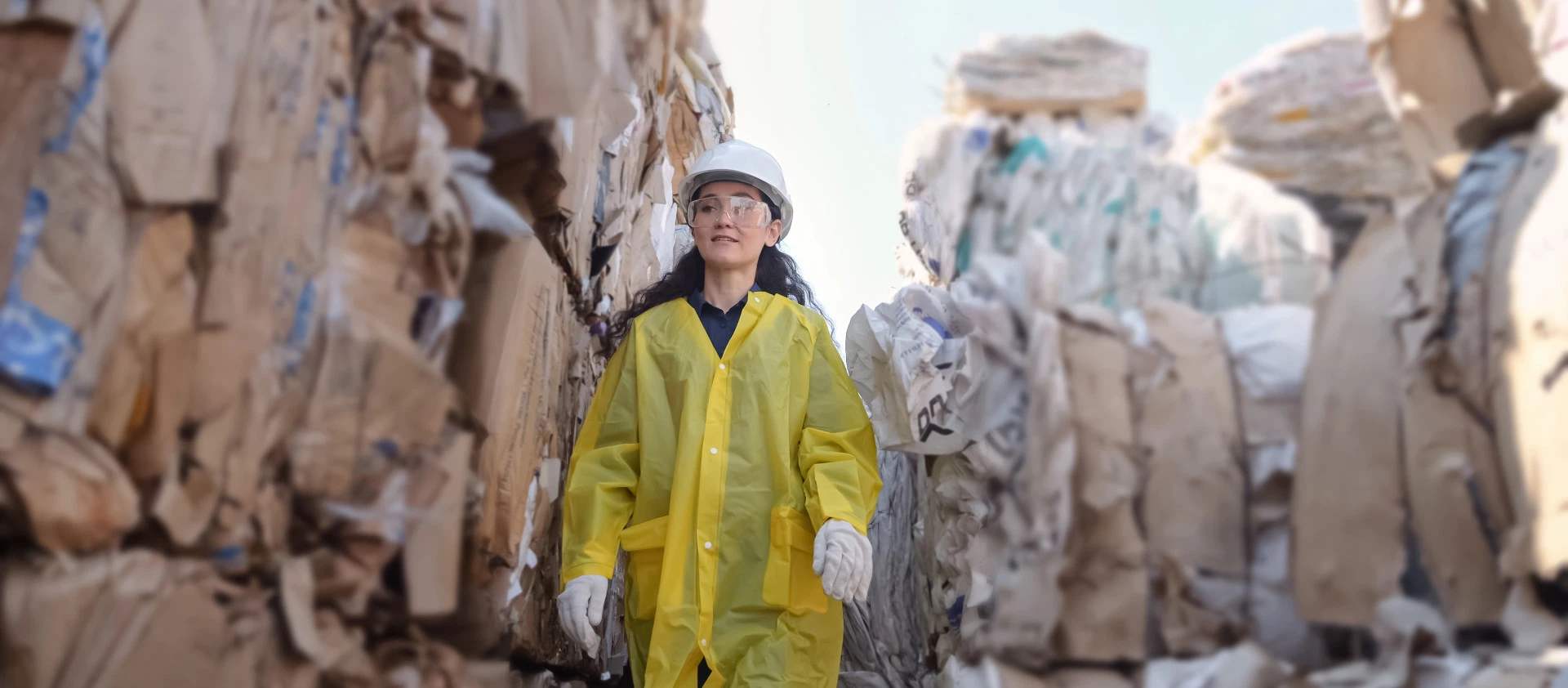
 Managed well, waste is opportunity — for the environment, for local economies, and for the workers who power them. Photo credit: Adobe Stock
Infrastructure underpins job creation and economic growth. Waste systems are a critical part of that foundation, yet in much of the world they remain inadequate. When waste is poorly managed, the damage ripples far beyond the sector itself, eroding the conditions for high-potential industries like tourism and agribusiness to thrive.
With the right investments, innovations, and policy changes, the waste management sector can generate more and better jobs while protecting the environment and infrastructure on which even more livelihoods depend.
Mismanaged Waste Undermines Job Creation
The World Bank Group’s new What a Waste 3.0 report, drawing on data from 217 countries and 262 cities, warns that one-third of all municipal solid waste generated globally is mismanaged. In low-income countries, the situation is far worse: only 3% of waste is treated in some way. The rest ends up littering communities, rivers, fields, and coasts, with direct effects on employment.
The tourism industry — one of the sectors with the greatest potential to create jobs — depends on clean beaches, clean air, and clean cities. Waste pollution directly erodes that foundation. Studies show that beach litter, for example, can reduce visitor numbers and revenue by 26% to 50% at heavily polluted sites.
Agribusiness faces the same pressure. Leachate from landfills and mismanaged plastic waste contaminates water and soil, squeezing crop yields and driving up costs for farmers who can least afford it. And infrastructure suffers too: drains clogged by uncollected waste exacerbate flooding, disrupt transport networks, and heighten risks to public health from waterborne diseases.
Mismanaged waste is also a missed opportunity. Waste is a resource — organic waste can feed composting operations, recyclables can re-enter supply chains, and residual waste can generate energy. Every tonne left unprocessed is not only an environmental liability, but an economic one: value unrealized, and jobs uncreated.
An Informal Workforce Waiting for Better Opportunities
Millions of people already work in urban waste and resource management in low- and middle-income countries. Many are women and young people who collect and sell recyclable materials as a primary source of income. Ninety percent of them are informal workers.
Informal workers handle between 10% and 30% of total municipal solid waste, forming the backbone of waste management in some of the world's fastest-growing cities. Yet they face serious hazards, like unsafe working conditions, unstable incomes, a lack of social protection, and persistent social stigma.
The challenge is not only to create more jobs in the sector, but better jobs by integrating informal workers into waste value chains and improving their working conditions — offering more stability, safety, and dignity.
The World Bank Group is Ready to Support
As the world's largest development financier for solid waste management, the World Bank Group provides the infrastructure financing, policy support, and private capital mobilization needed to build the waste sector into one that spurs economic development. Recent investments illustrate what this looks like in practice:
- In the Democratic Republic of the Congo, a new World Bank-financed program aims to establish a functioning solid waste management system in Kinshasa, where 98% of waste is currently openly dumped or burnt. The program aims to create 70,000 local jobs along the waste management value chain in its first phase.
- In Indonesia, the Local Service Delivery Improvement Project is using performance-based grants to incentivize waste management policy reform and improve waste service coverage. By linking funding to demonstrated results, the project supports the systemic institutional change needed to build a functioning, investable waste system that can attract private capital, expand service delivery, and create jobs at scale.
- And in Serbia, IFC and MIGA jointly supported a waste-to-energy public-private partnership in Belgrade, financing a new facility that can convert up to 340,000 tonnes of waste into energy, powering 30,000 homes and heating 60,000 each year. The project created 120 permanent jobs and 600 jobs during construction.
These projects highlight a simple point: waste is an infrastructure issue, and infrastructure enables cities to function, businesses to operate and jobs to grow. Countries that invest in waste management now are building more resilient economies for the future. Those that delay will only inherit a far more costly problem.
Related
- Publication: What a Waste 3.0
- Blog: Ten Takeaways from What a Waste 3.0
- Data360: What a Waste 3.0

Join the Conversation