
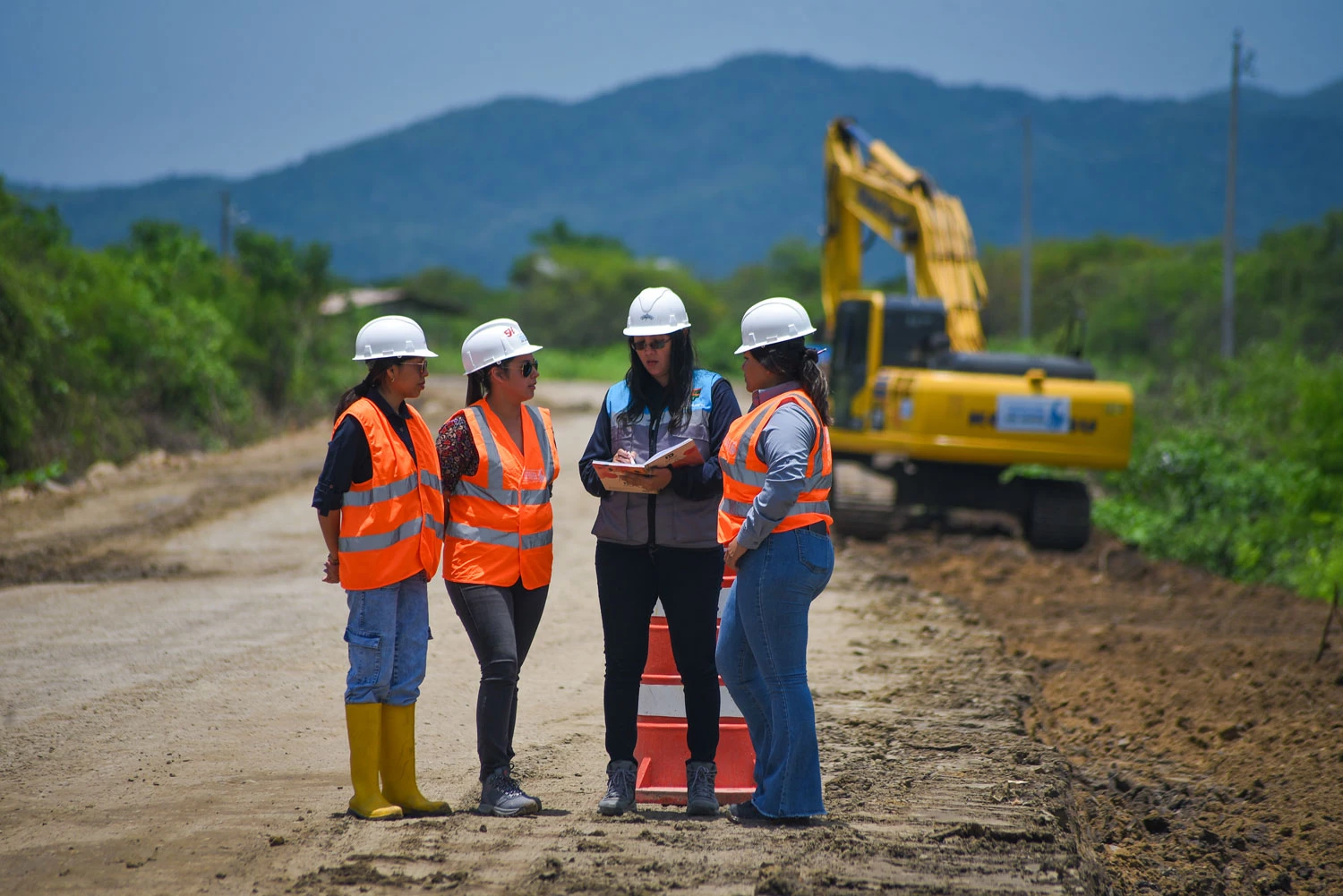
 Photo: San Antonio–San Miguel Highway / Guayas. Guayas Prefecture
Road maintenance, drainage clearing, pothole repair—these are still widely stereotyped as “men’s jobs.” But across rural Ecuador, women are proving otherwise. In the provinces Manabí, Tungurahua, and Pichincha, community-based road maintenance associations, are creating space for women to lead crews, manage resources, and keep essencial routes open. They do so through routine and preventive maintenance that helps connect their families to schools, health services, and markets.
Beyond income generation, these associations promote autonomy, leadership, and self-confidence among rural women. They take ownership of local infrastructure, manage resources, lead crews, and influence community decisions, while balancing household duties and seasonal agricultural work.
A study conducted in 2025 by the Ibergeo–MCRIT–PBP–DYA consortium with the leadership of the World Bank and financed by the Global Facility for Disaster Reduction and Recovery (GFDRR) found that organizations with strong female participation show greater internal cohesion, lower staff turnover, and more respectful labor relations—key ingredients for long-term sustainability.
“While they talk, we invoice (Mientras ellos hablan, nosotras facturamos),” jokes a leader from Azuay, capturing the pride of proving—through results—that women excel in roles once considered “men’s work.”

Training to Transform: Women Operating Heavy Machinery
Despite their essential roles in rural life, women have historically been excluded from many employment opportunities in the transport sector. Structural barriers, limited access to technical training, gender stereotypes linking road work with male physical strength, care responsibilities, and unsafe work environments have kept them on the margins.
These challenges are even more pronounced in rural areas, where many women wanted to participate but were unable to do so because they could not leave their children or were not taken seriously by others. Additional barriers included a lack of information about recruitment processes, high technical requirements, and long distances to worksites.
According to the Ministry of Infrastructure and Transport of Ecuador, women represent less than 10 percent of the personnel hired by road maintenance associations. However, promising experiences are emerging that demonstrate how policy support, community organization, and collective commitment can drive meaningful change. Infrastructure and Transport technicians in several provinces of Ecuador note that associations with active female participation tend to show better organization, stronger commitment to quality, and a greater capacity to inspire others.
With World Bank support, the Ministry of Infrastructure and Transport, and the Province of Guayas, an initiative was launched to expand women’s participation through technical training for heavy machinery operation—including backhoes, loaders, and motor graders. The program offers hands-on training, professional licensing, and support for job placement in public and private works. Flexible schedules, scholarships, and virtual options have significantly boosted participation among rural women. The objective is clear: equip women with specialized skills that increase productivity and raise household incomes.

Impact Beyond Economics
The benefits of women’s employment in road maintenance extend far beyond financial gains. Their participation enhances community appreciation of infrastructure, promotes safer work practices, and strengthens the social fabric.
How to Close the Gender Gap in Road Transport?
Despite recent progress, women’s inclusion in Ecuador’s transport sector remains limited and uneven, often driven by isolated local efforts. Achieving structural change requires coordinated action across institutions, private companies, and communities.
The 2025 study identified three layers of intervention needed to close the gap:
1. Institutional: policies that guarantee equal access. MIT and Decentralized Autonomous Governments can embed gender equity into public procurement by:
- Recognizing and rewarding associations with significant female participation
- Requiring sex-disaggregated data
- Setting measurable targets for inclusion
2. Economic and operational: better training and working conditions. It is not enough to open the door—women must be able to stay in the sector. This requires:
- Ongoing, locally tailored technical training
- Scholarships and mentorship programs
- Safety and anti-harassment protocols
- Equipment adapted to women’s characteristics
- Accessible childcare options
3. Cultural and community: shifting perceptions and creating role models
Transforming norms is essential. Communication campaigns, community workshops, and increased visibility for women already working in the field can help dismantle stereotypes and broaden aspirations. In communities where women are seen operating machinery and performing technical roles, younger girls begin to imagine futures beyond traditionally feminized professions, expressing interest in working with equipment and pursuing technical careers.
Ultimately, women’s inclusion in transport is not merely a matter of equity; it is a strategic investment in sustainable development. It drives formal employment, boosts local productivity, and enhances the efficiency of public infrastructure spending.



Join the Conversation