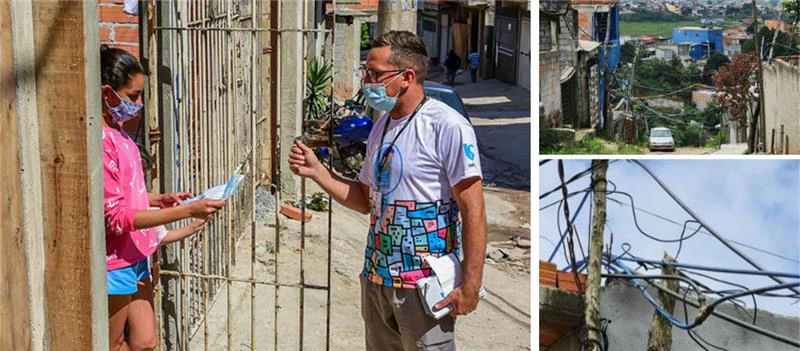
Water is foundational infrastructure: it creates, enables, and protects jobs across economies. Globally, water underpins 1.7 billion jobs; yet, billions of people still lack safe water and sanitation, holding back growth and investment. Most Brazilians — 84%, in 2024 to be more precise — can turn on the tap and get safe drinking water. But for many families living on the edge of São Paulo, this basic service isn’t always reliable. Financial struggles mean that some residents can’t pay their water bills on time, leading to service interruptions that have an impact not only on people’s health, but also on jobs and businesses. In neighborhoods just outside the city center, these challenges are even more pronounced.
Many people aren’t fully aware of the long-term benefits of paying regularly for water and sanitation, and deep inequalities persist: while some areas enjoy modern infrastructure, others rely on unsafe, makeshift water sources.
The Água Legal Program: Making Water Access Fair and Simple
To tackle these problems, Sabesp (São Paulo’s main water utility) launched the Água Legal program in 2015. In Brazilian Portuguese, the word “Legal” carries a double meaning: it refers both to something that is lawful or official and is also a popular slang term for “cool” or “great.” The program’s name, Água Legal, cleverly highlights both the importance of having water that meets legal standards and the attractive, positive appeal of safe, reliable water.
The program’s goal is simple: to help marginalized communities connect to Sabesp’s network and show residents why regular payments matter for their health and well-being.
At first, Água Legal focused on personal outreach. Sabesp agents went door-to-door, talking with families about the benefits of joining the official water system. These conversations helped people understand how paying for water could improve their lives. But when the COVID-19 pandemic hit, these efforts had to pause. To help families cope, Sabesp offered a six-month break from water bills for those most in need.
Understanding Why People Don’t Pay—and How to Help
When the payment break ended, many residents didn’t start paying again. To figure out why, the Improving Water Service Access and Security in the Metropolitan Region of São Paulo Project identified an opportunity to support Sabesp through the Water Global Practice, in collaboration with the Mind, Behavior, and Development Unit (eMBeD). Together, they looked for the real reasons behind late payments.
Through surveys and data analysis, the team discovered that emotions, habits, and social pressures often lead people to make choices that aren’t in their best interest.
For example, some residents felt overwhelmed by bills, while others didn’t see the value in switching to formal water services. Using these insights, Sabesp designed new strategies to make paying easier and more appealing.
The new approach included:
- Clearer communication about water services and payment options
- Help with the practical side of paying bills
- Financial education workshops for residents
Social workers were trained to become “community multipliers”— local champions who could answer questions and support neighbors as they switched to formal water connections.
Pilot Program: Small Changes, Big Results
Sabesp tested two training modules: “Being a Water Customer” and “Financial Education 101.” Residents received simple planning tools like fridge magnets and budgeting notebooks to help them remember to pay and manage their money.
The first module explained the benefits of legal water connections and the risks of relying on informal sources. The second module gave practical tips for household budgeting, helping families take control of their finances.
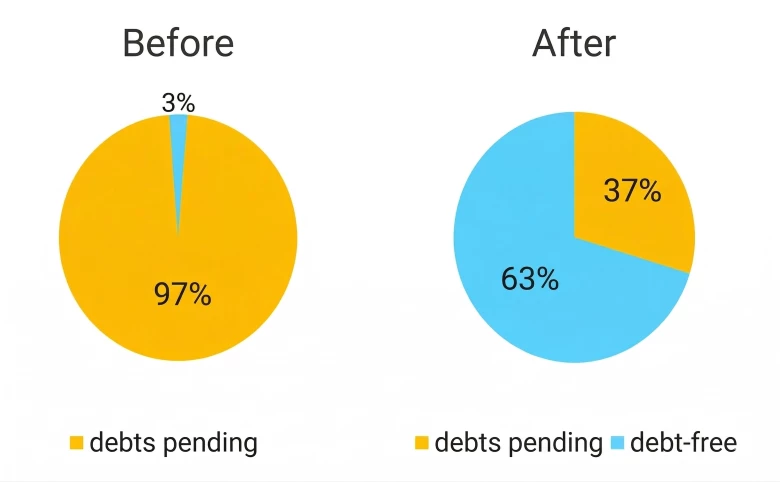
The results were impressive. Before the workshops, 97% of participants had one or more outstanding debts, but this number dropped to 63% after the sessions. Women made up most attendees, representing 77% of participants.
The initiative also led to a sharp decline in default rates: the proportion of clients with one overdue bill fell from 53% to 26%, while those with two overdue bills dropped from 45% to 29%. In addition, 28 community discussions involving 547 residents helped strengthen a sense of collective responsibility in the neighborhoods.
The program even reached local schools, teaching children about money management and the importance of paying for services. By starting early, Sabesp hopes to build lasting habits that will benefit families for generations.
A Blueprint for Change
By using behavioral science, the Água Legal program helped families not only pay their water bills but also plan for their futures. The partnership between Sabesp and its customers grew stronger, especially for those who felt overwhelmed by financial stress.
The success of Água Legal shows that understanding people’s motivations and challenges is key to solving complex problems. As Sabesp continues to expand its work, these lessons will guide future projects—making sure everyone has access to safe, reliable water and sanitation.
This kind of people-centered approach is exactly what the World Bank Group's Water Strategy calls for at scale. With an ambition to advance water security for 400 million people by 2030 — 250 million of them through universal access to safe drinking water, sanitation, and hygiene — the strategy recognizes that infrastructure alone is not enough. Sustained access depends on trust, behavior, and financial empowerment. As Sabesp continues to expand its work, the lessons from Água Legal offer a practical blueprint: making sure that safe, reliable water is not just available, but truly within reach for everyone.


Join the Conversation