
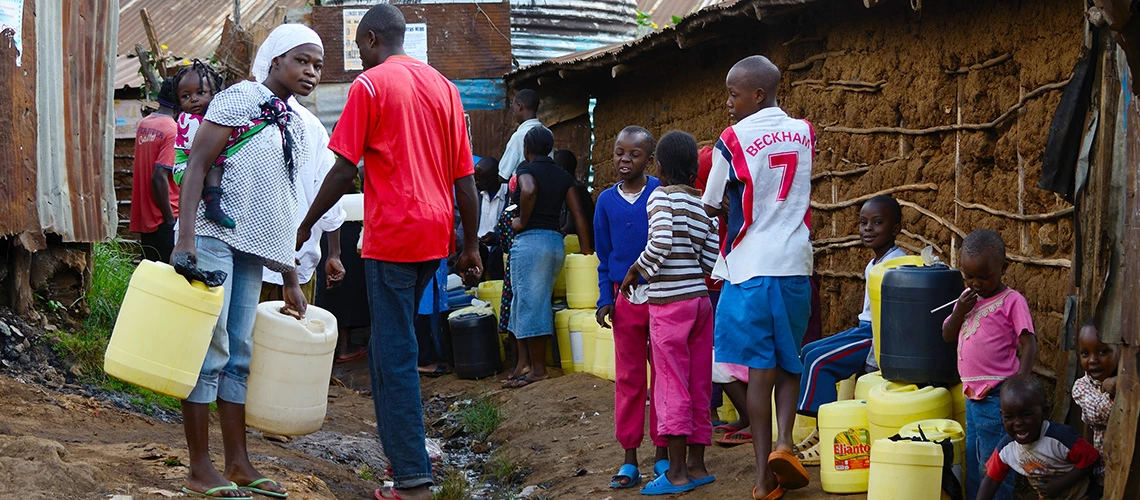
 Waiting in line for water, Nairobi, Kenya. | © Shutterstock.com
Kenya's vibrant economy and its rich natural heritage are deeply intertwined. From the farms that feed the country to the stunning landscapes that attract global tourism, a healthy environment is the bedrock of Kenya's prosperity. However, this vital connection is under threat, and the economic consequences of nature degradation are becoming increasingly clear.
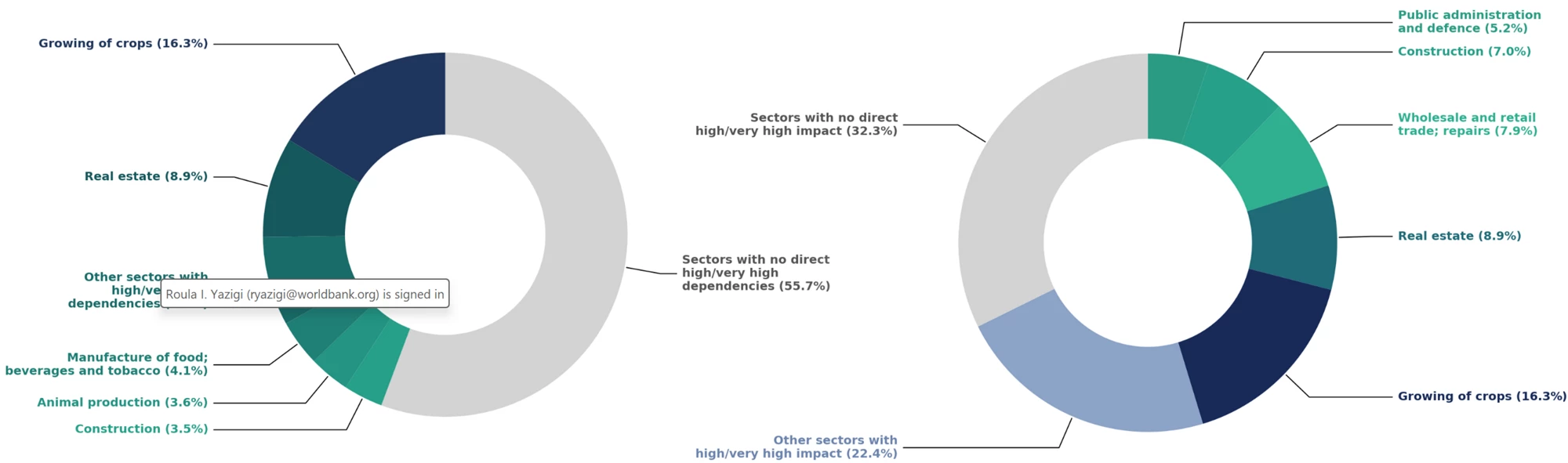
A recent World Bank report, "Nature's Bottom Line: The Economic and Financial Costs of Ecosystem Degradation in Kenya," reveals a startling statistic: 44% of Kenya's GDP comes from sectors that are highly or very highly dependent on ecosystem services (Figure 1). This includes critical sectors like agriculture, real estate, and construction, all of which rely directly on the health of our natural world.
Unsustainable practices, the growing impacts of climate change, and pervasive pollution are rapidly degrading these essential services. This is not just an environmental concern; it translates into tangible economic costs, affecting everything from crop yields to the reliable supply of water.
Figure 1: Ecosystem service dependency (left) and impact (right) of Kenya’s economic sectors as share of GDP
Source: World Bank 2025
Water-related ecosystem services, such as clean water provisioning and flood and storm protection, are particularly crucial for Kenya's economy. Yet, deforestation and the conversion of dense vegetation are disrupting these natural cycles, increasing the volatility of water supply for agriculture and industry. However, the problem is not that Kenya would run out of water; rather, it faces economic water scarcity, meaning that significant resources remain unharnessed. The solution, therefore, lies in directing capital toward resilient infrastructure and ensuring sustainable water management to unlock and preserve the water resources that are already there.
As the global community shifts towards more sustainable practices, Kenya's economy also faces what are known as "transition risks." For instance, a recent Thomson Reuters Institute study notes that almost two-thirds of trade professionals across the world now consider ESG compliance across their supply chains. This shift poses a distinct challenge for Kenya, where sectors with high ecosystem impacts—such as agriculture—underpin 68% of GDP (Figure 1). Without proactive policy measures and innovative approaches such as nature-based solutions, these sectors could find themselves vulnerable to new regulations, shifting consumer preferences, and evolving investor sentiment.
Financial Sector Risks
The degradation of nature also poses risks to Kenya's financial sector. Banks and other financial institutions face considerable exposure through their lending portfolios, particularly to sectors that are highly dependent on nature. While agriculture is an obvious example, other major sectors are also at risk. For instance, real estate and manufacturing, which together account for over 27% of gross loans, are highly vulnerable due to their substantial water consumption.
However, more precisely quantifying this financial risk remains difficult. Current data constraints prevent a full assessment of these nature-related financial risks, underscoring the urgent need for more granular spatial and sectoral financial data to capture the true extent of exposure.
Some Kenyan banks are already moving ahead. Actively supported by the Kenya Banking Association (KBA) they have shown a commitment to improving their management of nature-related risks. The adoption of frameworks such as the Taskforce on Nature-related Financial Disclosures (TNFD) one marks important progress in this regard.
A Call to Action
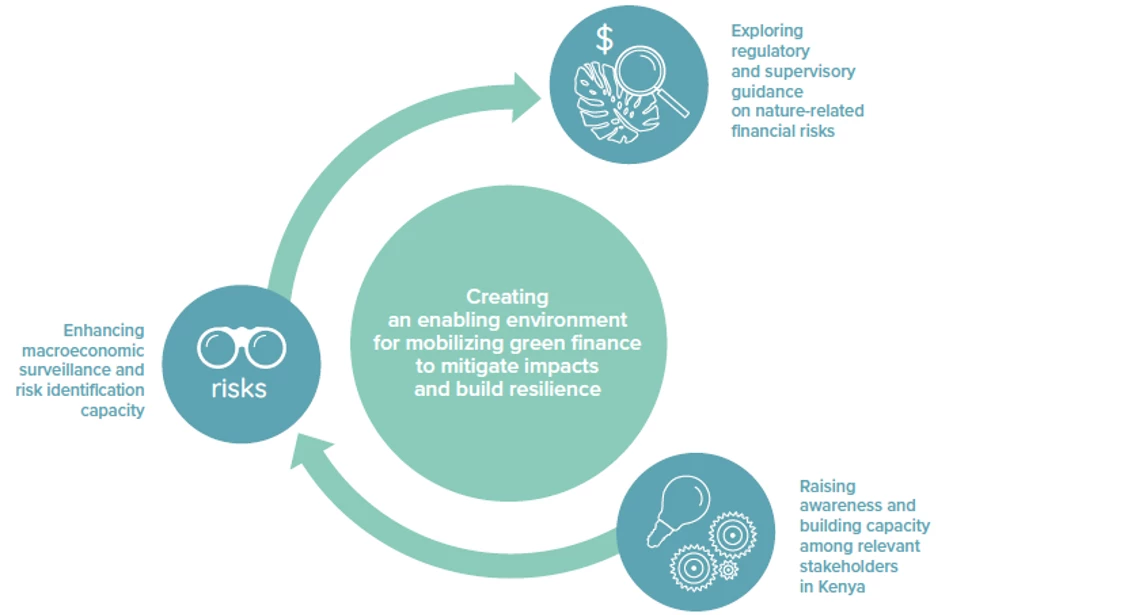
The report hence serves as a call to action for all stakeholders. It is imperative to recognize the intrinsic value of Kenya's natural capital and integrate nature-related risks into economic and financial decision-making. This will require a concerted effort to raise awareness, enhance data collection and risk identification, explore regulatory guidance, and create an enabling environment for green finance to mitigate impacts and build resilience (Figure 2).
Figure 2: Roadmap to address nature-related financial risks in Kenya
Source: World Bank 2025
Nature-based solutions like agroforestry and watershed rehabilitation should be central to this agenda. They serve not just as conservation measures but as critical risk-mitigation tools that stabilize yields and supply chains. Yet, their adoption remains limited. To unlock their full potential, especially for critical exports like coffee and tea, incentives need to be aligned with nature. This requires integrating nature-based solutions into value chains and ensuring that trade policies reward producers for the ecosystem services they preserve.
By combining improved ecosystem management, resilient infrastructure, aligned incentives and inclusive finance, it is possible to safeguard Kenya's natural heritage and ensure a prosperous and sustainable future for generations to come.
The authors thank Ghada Elabed, Senior Agriculture Economist and Pieter Waalewijn, Lead Water Resources Management Specialist for their helpful comments.




Join the Conversation